
A Guide to Lombardy Seasonal Cuisine by Season
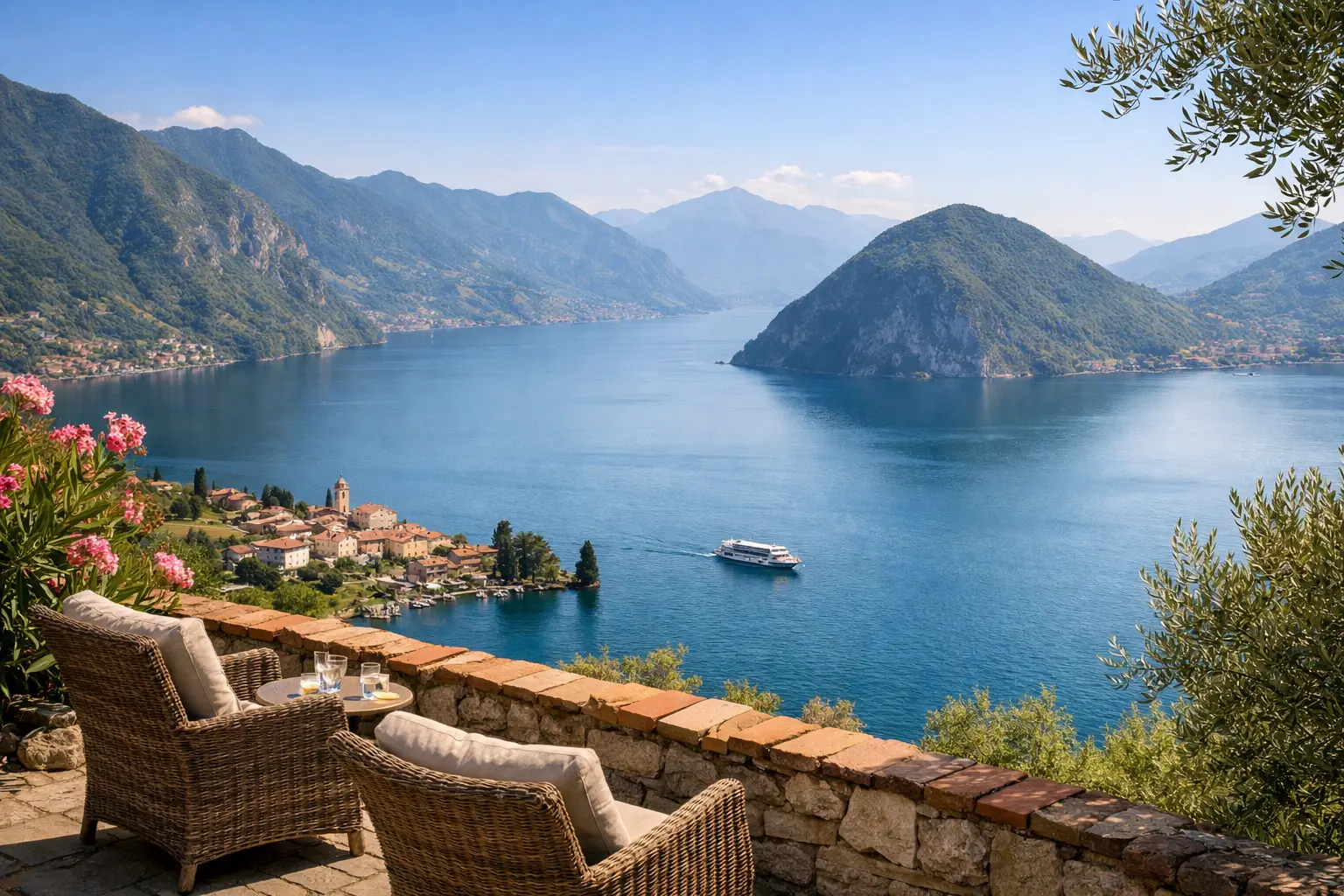
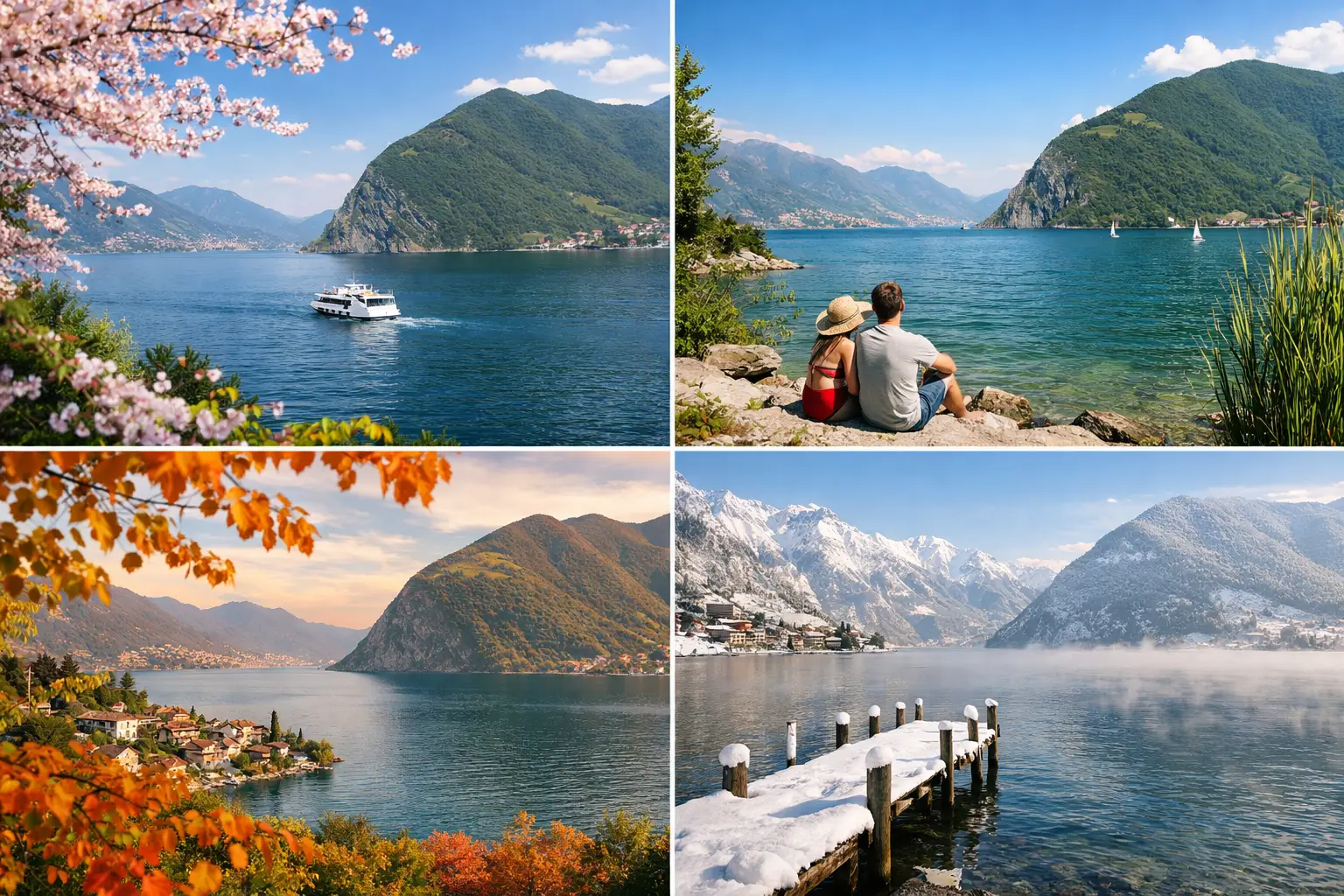
The first cool evening in the hills above Lake Iseo calls for a different meal than a bright June lunch by the water. That simple truth is at the heart of this guide to Lombardy seasonal cuisine. Here, food follows the weather, the harvest, and the rhythms of mountain life: fresh cheeses and tender greens when spring arrives, lake fish and garden vegetables in summer, mushrooms and chestnuts in fall, and slow, comforting dishes when winter settles over the Alps.
For travelers, eating seasonally is not about following a rulebook. It is a lovely way to understand where you are. A plate of local food can hold the scent of a nearby forest, the richness of a hillside dairy, or the quiet patience of a family recipe prepared as it has been for generations.
Why Lombardy’s Seasons Taste So Different
Lombardy is a region of striking contrasts. Lakes soften the climate in places such as Lake Iseo, while nearby valleys and mountain slopes bring cooler temperatures, pastures, woods, and a shorter growing season. The fertile plains farther south add rice, corn, vegetables, and fruit to the regional table.
That variety explains why there is no single Lombardy cuisine. A creamy risotto may feel most at home in the lowlands, while polenta, cured meats, mountain cheeses, and game speak more clearly of the alpine areas. Around the lakes, freshwater fish brings another character altogether.
Seasonality matters because many of the region’s most memorable dishes are at their best when ingredients are close at hand. A restaurant may serve polenta all year, of course, but the experience changes with what accompanies it: soft spring cheese, summer vegetables, porcini mushrooms in fall, or a hearty braised meat in winter.
Spring: Greens, Eggs, and Fresh Mountain Cheese
When the landscape begins to turn green, Lombardy’s table becomes lighter without losing its generous spirit. Wild herbs, asparagus, peas, spinach, and tender salad greens appear alongside eggs and newly made cheeses. After the richer meals of winter, these flavors feel especially welcome.
In the mountain areas, spring is a fine time to look for dishes made with local dairy products. Fresh ricotta, soft cheeses, and young forms of goat or cow’s milk cheese have a delicate flavor that needs little adornment. They may be served with vegetables, folded into filled pasta, or enjoyed simply with bread and a little honey.
What to order in spring
Risotto with asparagus is a familiar seasonal pleasure, particularly when it is prepared with restraint and allowed to remain creamy rather than heavy. Stuffed pasta with ricotta and herbs is another comforting choice. In some kitchens, you may find a simple soup or savory pie that makes the most of spring greens.
Spring weather in Lombardy can change quickly. A sunny afternoon may invite a light lunch outdoors, while a cooler evening calls for polenta with melted cheese or a warm bowl of soup. That is part of the season’s charm: the menu can hold both freshness and comfort on the same day.
Summer: Lake Fish, Garden Produce, and Long Evenings
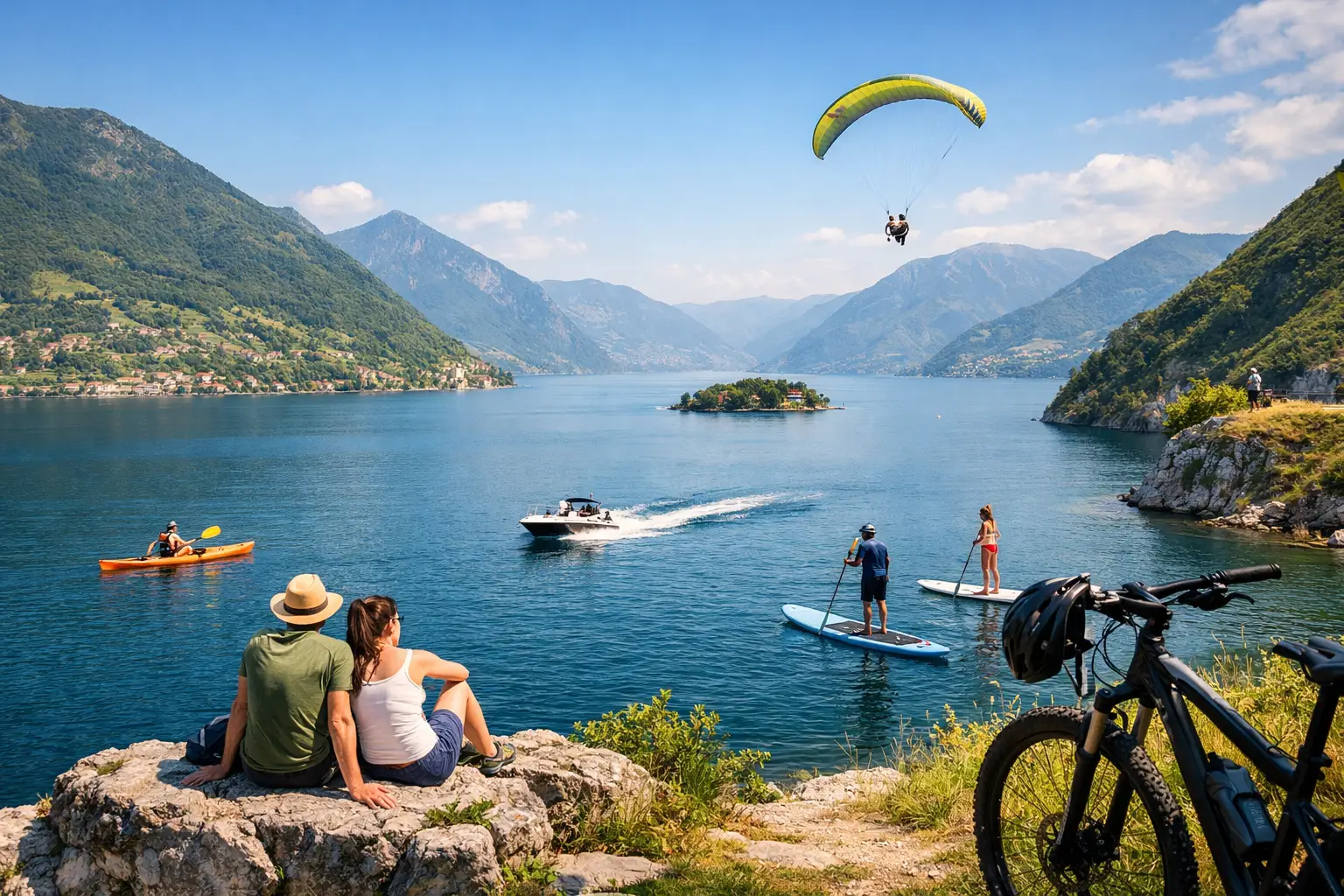
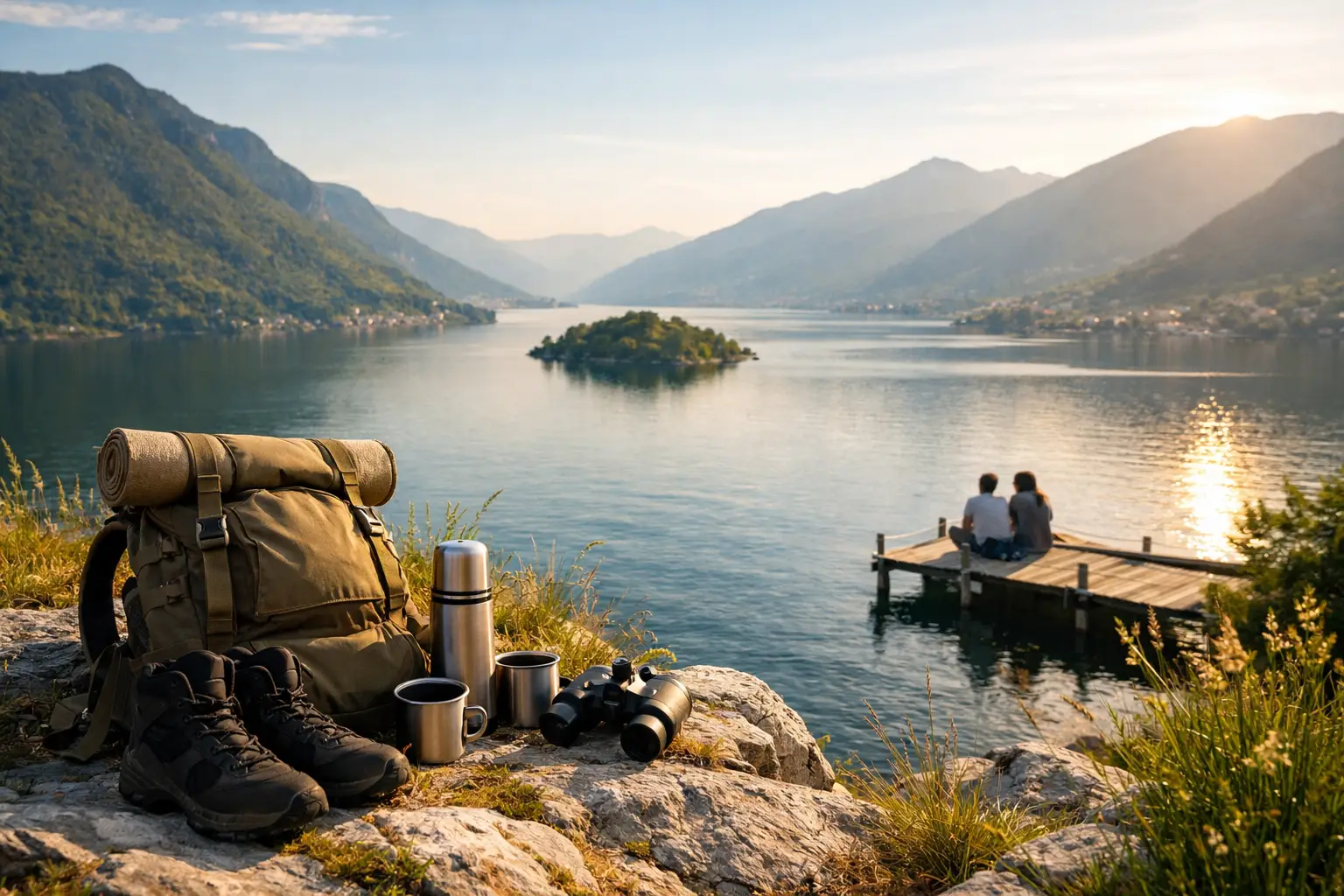
Summer around Lake Iseo has its own appetite. Days spent walking, swimming, cycling, or simply enjoying the view often lead naturally to meals that feel bright and unhurried. Tomatoes, zucchini, eggplant, green beans, peppers, and fragrant basil bring color to the table, while the lake provides fish with a distinctly local identity.
Freshwater fish deserves special attention. The preparation varies with the catch and the kitchen, but simplicity is often best: grilled fish, fish with herbs, or a preparation that lets the flavor of the lake remain clear. Sardines from the lake, trout, perch, and other local species may appear depending on season and availability.
Polenta may still be present in summer, especially in the hills, but it is often paired with lighter accompaniments. A plate of grilled vegetables, cheese, and cured meats can be ideal after a morning on the trail. For a more substantial dinner, look for pasta or risotto featuring summer vegetables and local cheese.
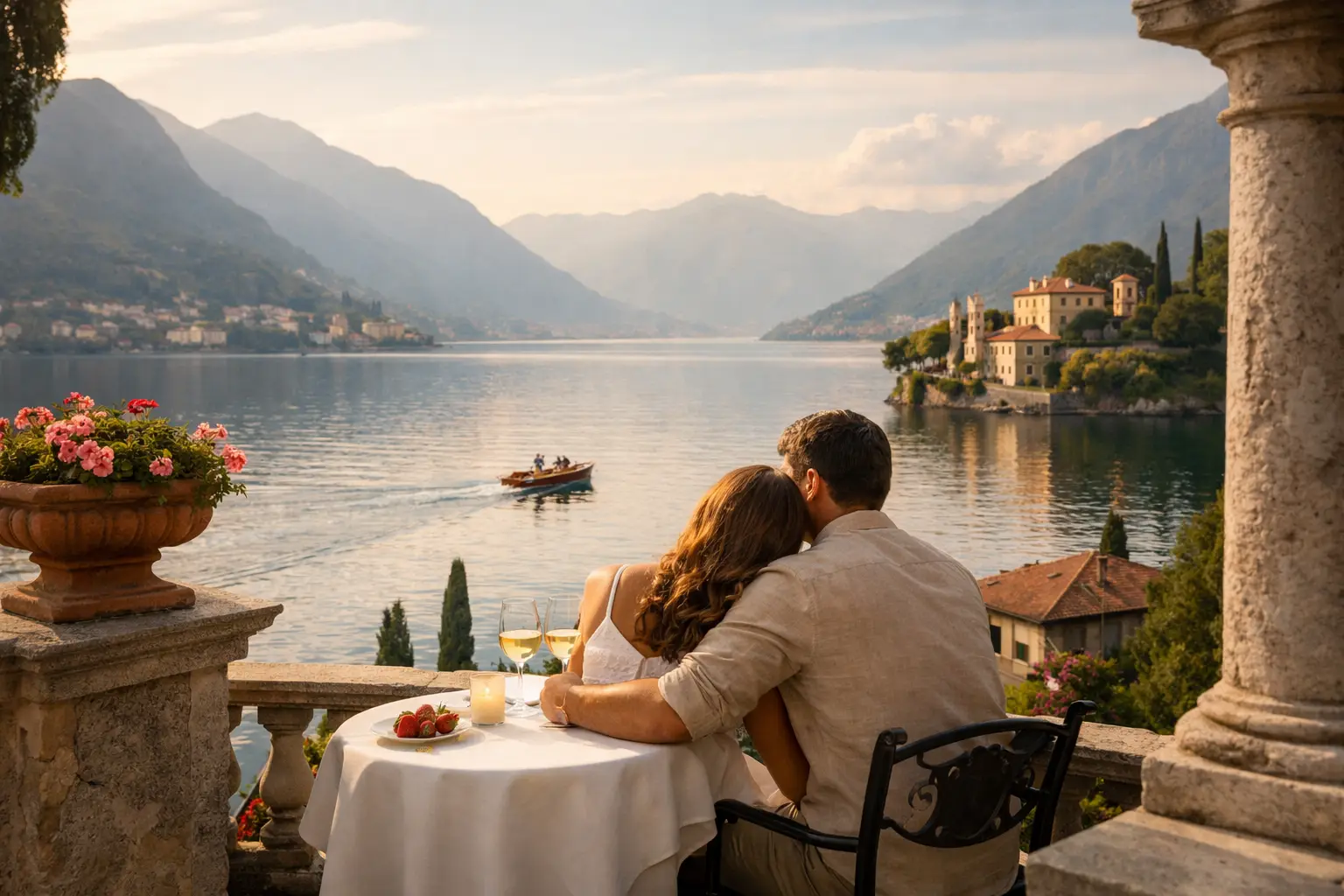
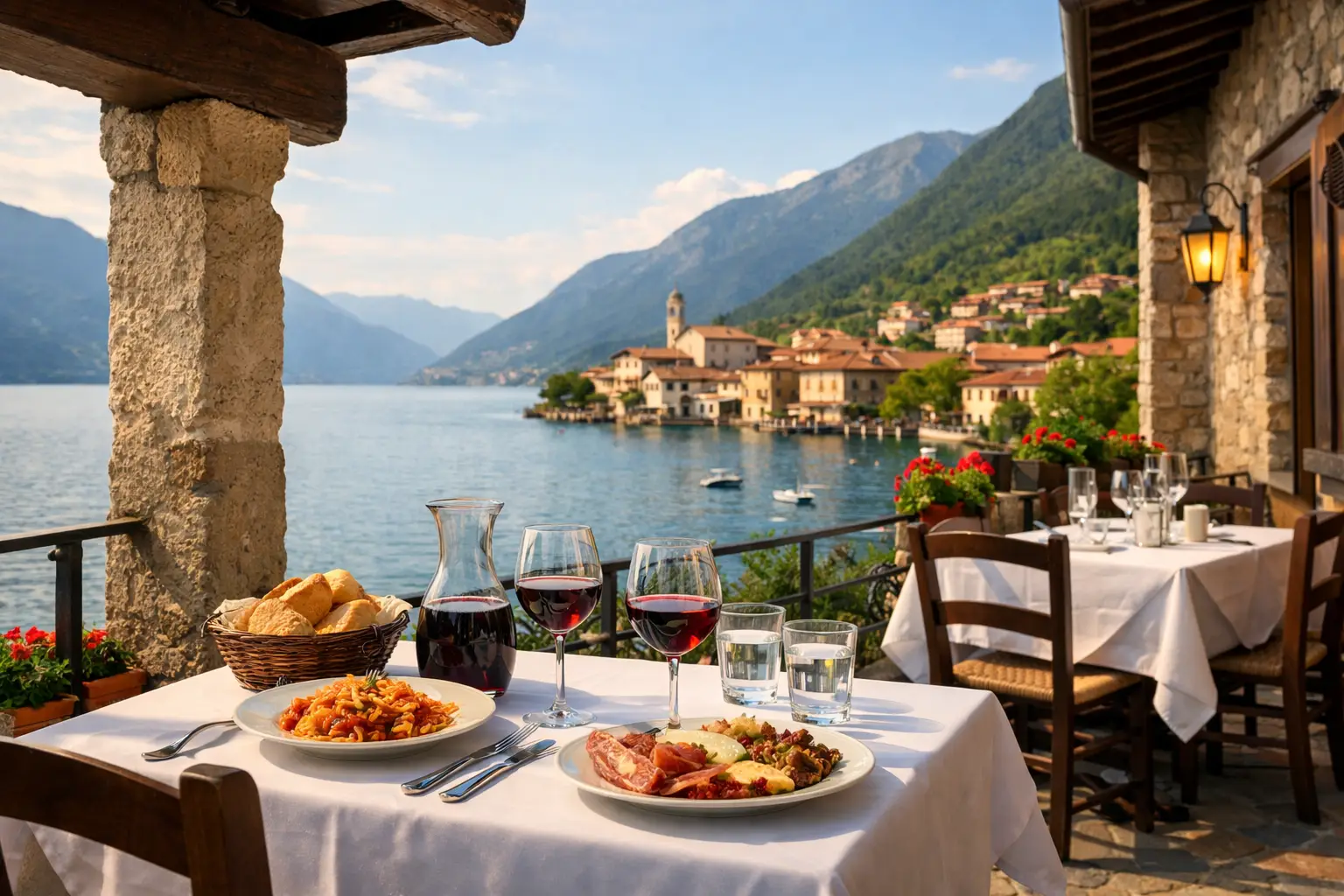
Summer is also when timing matters. In smaller towns and mountain villages, the most memorable meals are often those enjoyed slowly, after the heat has eased. Choose a shaded terrace or a dining room with open windows, order according to the day’s menu, and leave room for conversation. Lombardy hospitality is rarely rushed when it is at its best.
Fall: Mushrooms, Chestnuts, and the Return of Polenta
For many food lovers, fall is the most rewarding season in Lombardy. The air cools, woods become fragrant, and menus grow deeper in flavor. Mushrooms, chestnuts, pumpkins, grapes, pears, and late-season vegetables arrive just as the desire for warm, slow-cooked food returns.
Porcini mushrooms are especially prized when conditions are right. Their earthy flavor works beautifully with risotto, pasta, eggs, and polenta. Availability is never guaranteed, and that is exactly why they are worth noticing on a menu. A dish made with fresh local mushrooms tells a different story from one prepared with ingredients brought in from afar.
Fall dishes worth lingering over
Polenta becomes central again in autumn, sometimes soft and creamy, sometimes cooled, sliced, and grilled. It may come with mushrooms, cheese, sausage, or a rich meat sauce. In the valleys, you may encounter dishes that combine polenta with butter and local cheese, generous in the way mountain cooking should be.
Pumpkin-filled pasta, chestnut desserts, and braised meats also fit the season beautifully. The balance matters. A long hike in crisp air may call for a richer dinner, while a quieter day might be better suited to risotto with mushrooms and a glass of local wine. Seasonal eating is not about ordering the heaviest dish available. It is about choosing what feels right for the place, the weather, and the day you have had.
Winter: Slow Cooking and the Comfort of Tradition
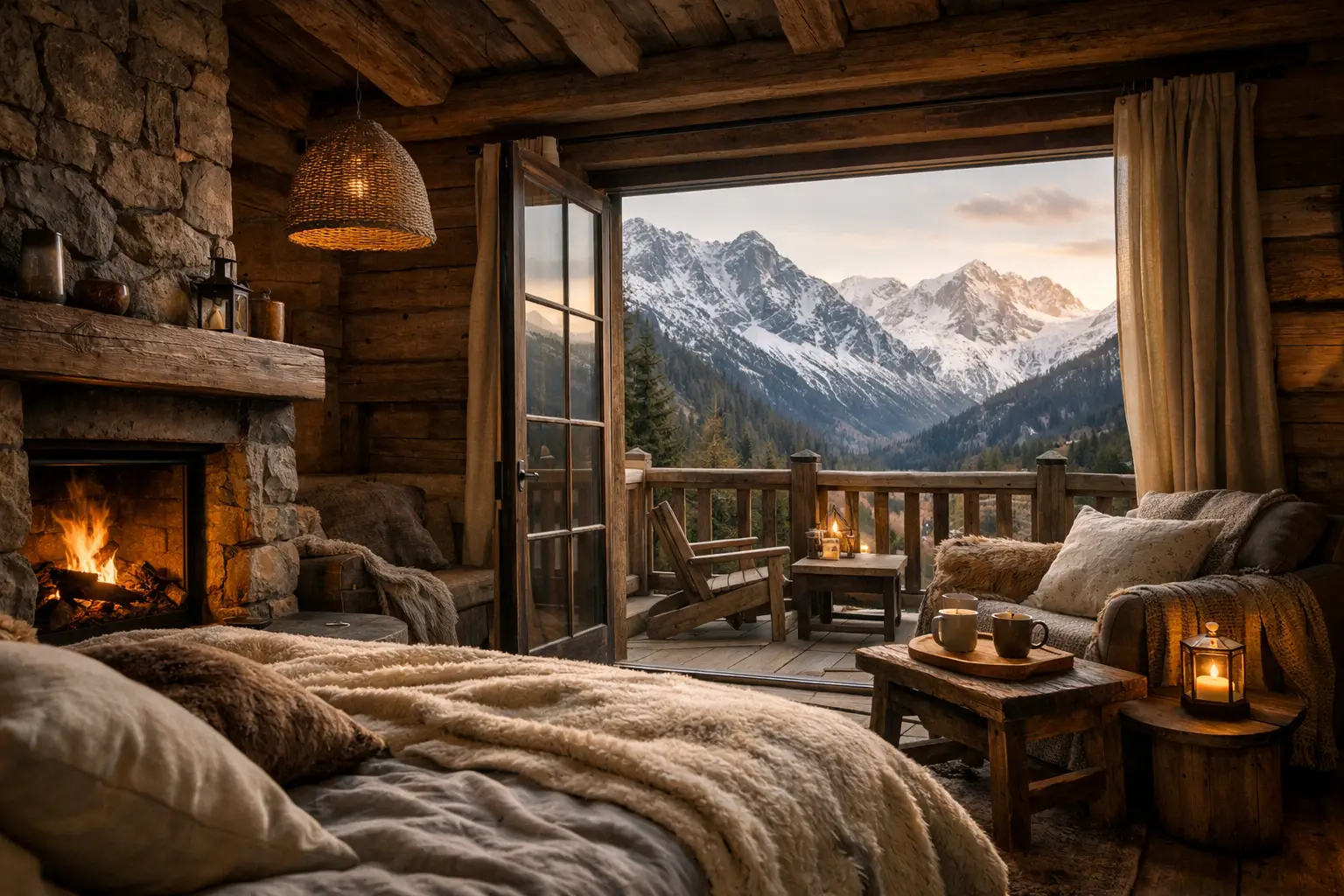
Winter cuisine in Lombardy is deeply reassuring. Snow on higher ground, early sunsets, and quiet villages create the setting for dishes that take their time. Braises, soups, stews, polenta, rice dishes, and aged cheeses become the natural language of the table.
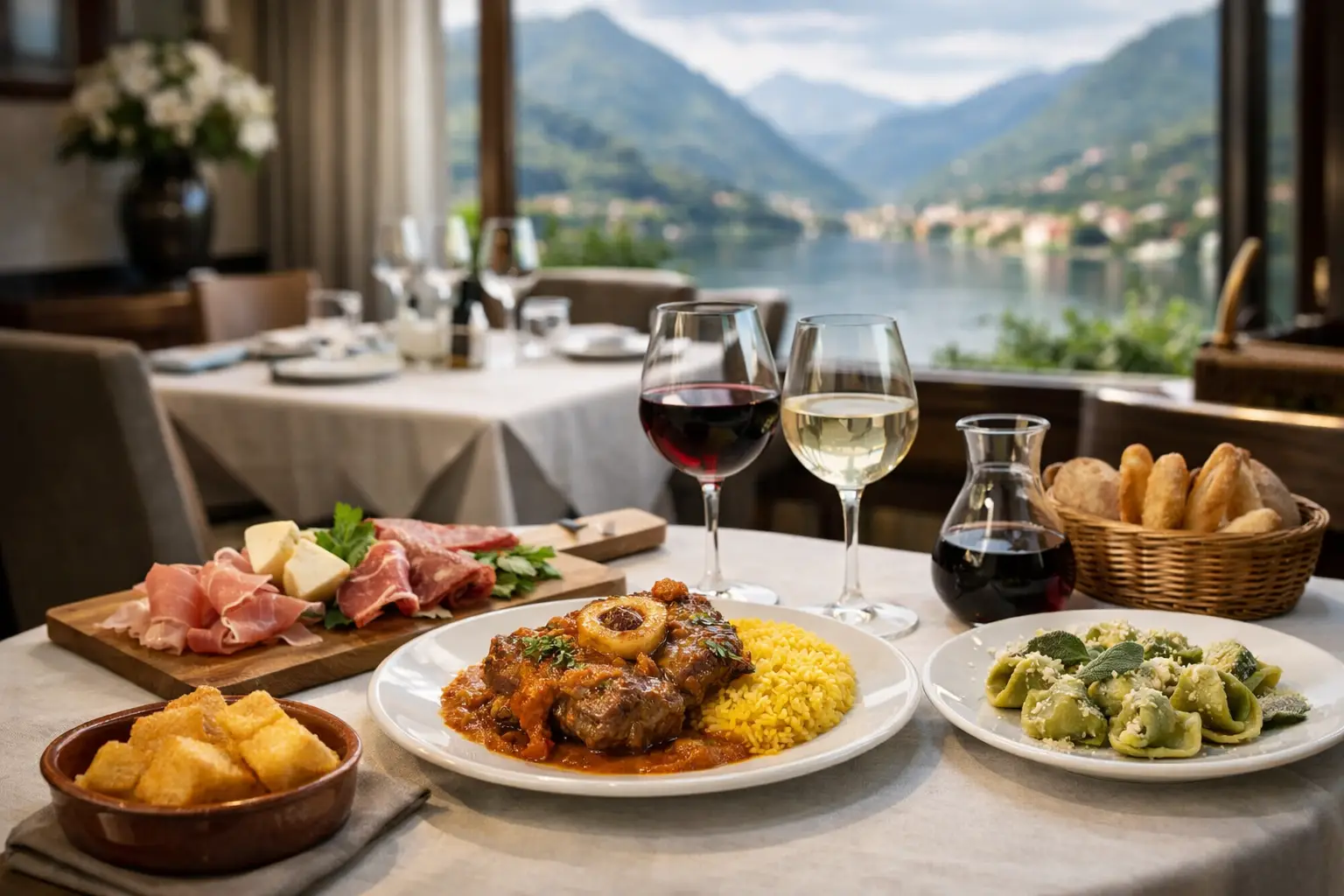
Risotto alla Milanese is one of the region’s best-known dishes, colored with saffron and enriched with butter and cheese. It belongs to the wider Lombardy tradition, though its character feels different from the more rustic foods of the mountain and lake areas. A good seasonal meal can include both worlds: refined rice dishes and straightforward alpine cooking, each prepared with care.
In colder areas, look for slow-cooked beef, game when available, and hearty soups made with legumes or vegetables. Casera-style cheeses and other aged mountain cheeses bring depth to polenta and pasta. These are foods made for lingering at the table after a day outside, when warm hands and a full plate are small luxuries.
At Hotel Conca Verde, this is the kind of season when a traditional dinner feels like an extension of the welcome: comforting, unpretentious, and prepared to help guests settle in after the quiet beauty of the surrounding hills.
How to Eat Seasonally While Traveling in Lombardy
The best approach is to let the menu lead. Rather than arriving with a fixed list of famous dishes, ask what is especially good that day or what the kitchen recommends from local producers. In family-run restaurants, the answer often reflects what has arrived from a nearby farm, dairy, garden, or market.
Be open to regional variations. A dish with the same name may change from one valley to the next, and that is not inconsistency. It is local character. Polenta can be soft or firm, yellow or darker in tone; risotto can be delicate or deeply savory; cheese can be mild, grassy, nutty, or wonderfully pungent.
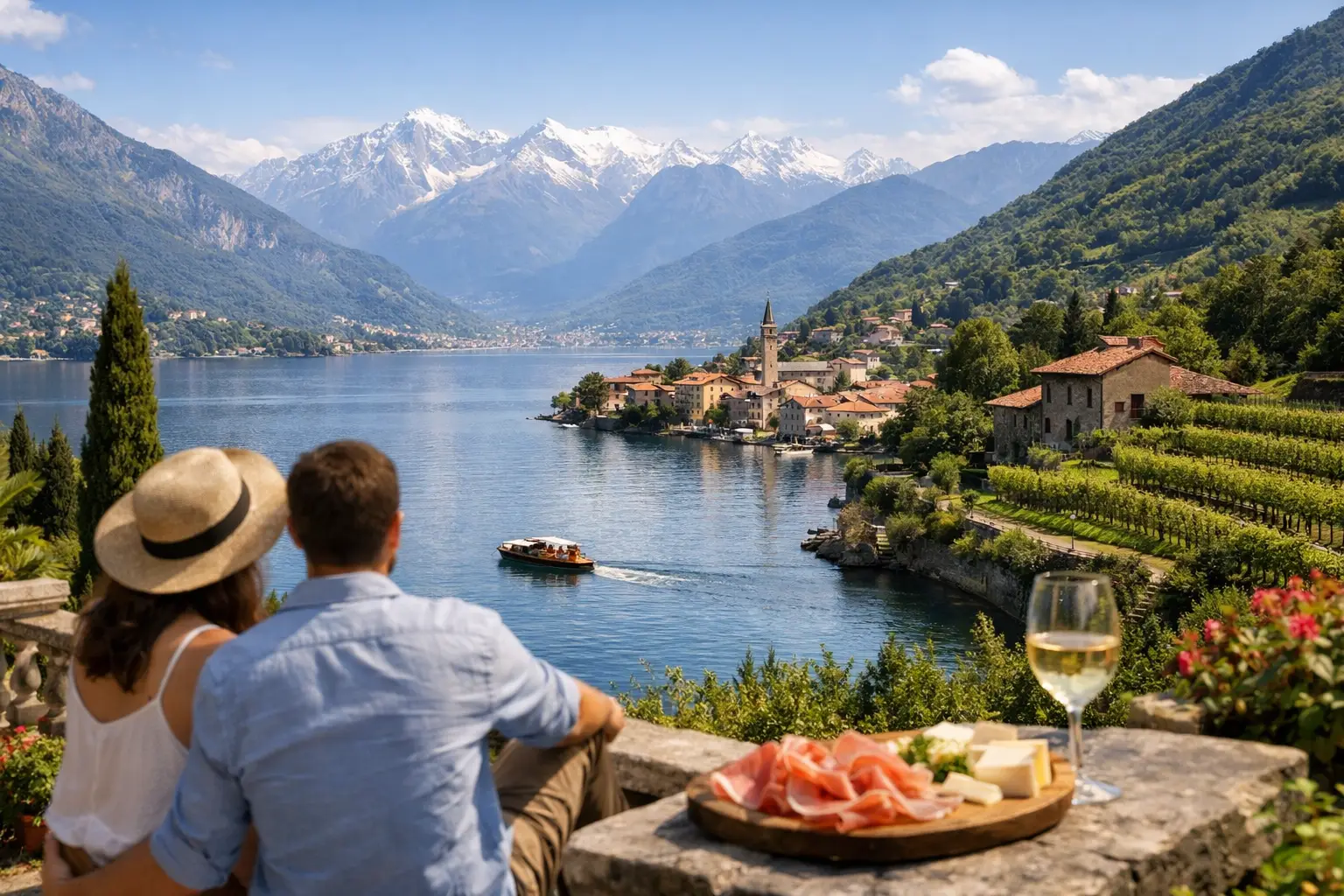
Also consider the setting. A picnic-style lunch of bread, cheese, cured meat, and fruit may be perfect after an easy lakeside walk. A formal multi-course dinner may be best saved for an evening when you can give it the time it deserves. Families may prefer sharing plates and familiar favorites, while couples may enjoy choosing a seasonal tasting menu and letting the meal unfold slowly.
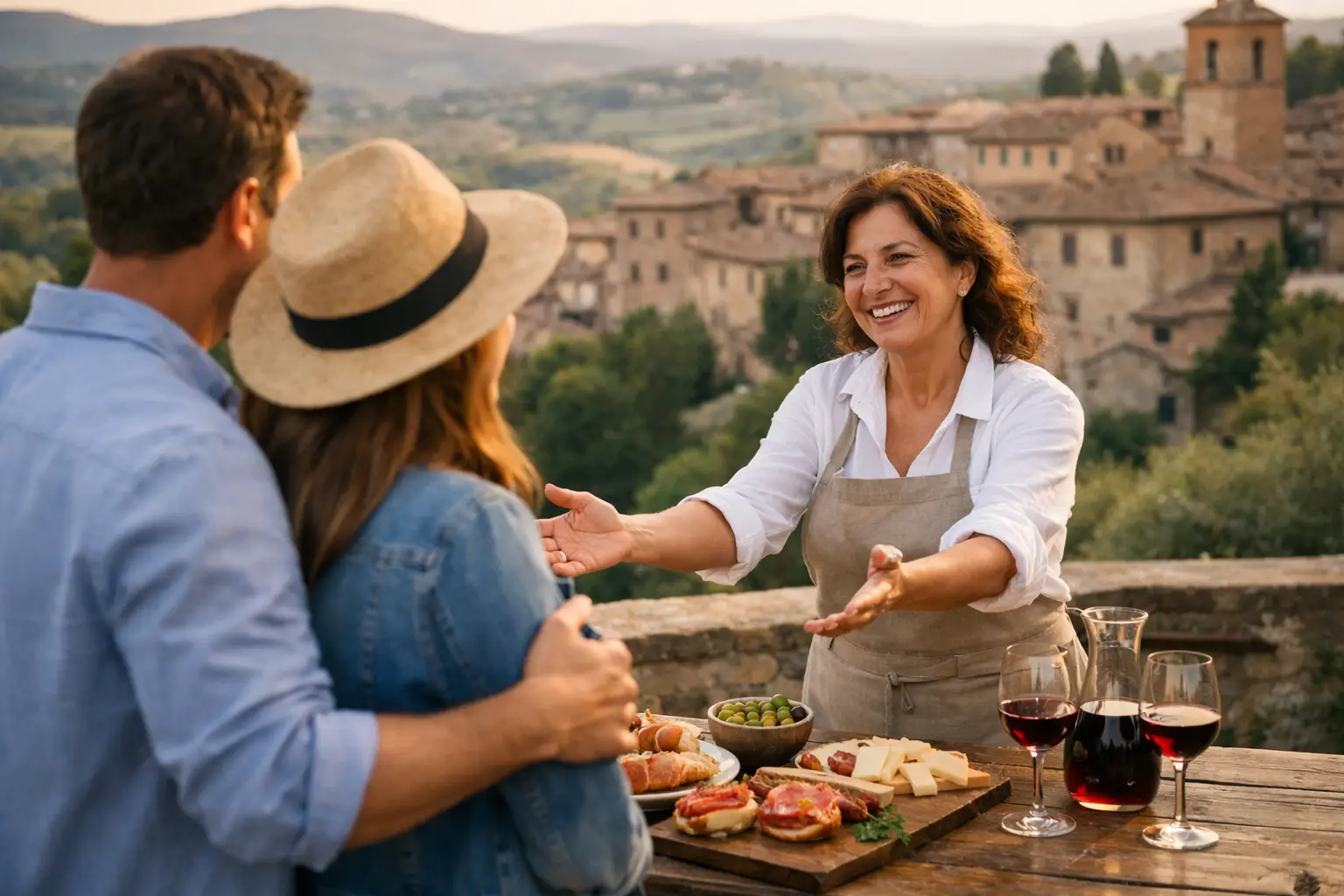
A thoughtful meal in Lombardy does more than satisfy hunger. It gives a day in the mountains or by the lake a warm ending, and often leaves the most lasting memory of all: not just what was served, but how welcome you felt at the table.